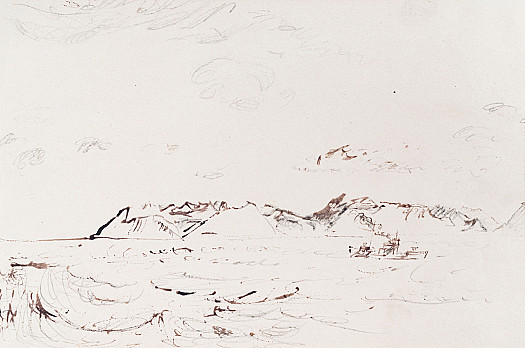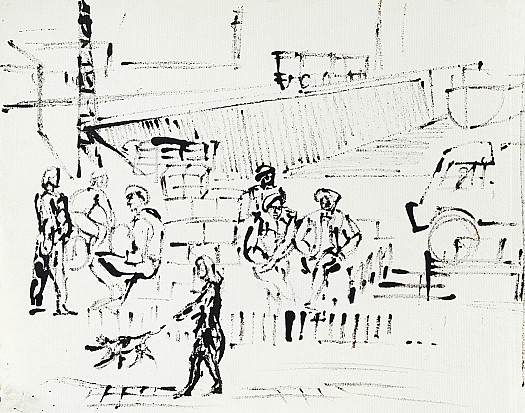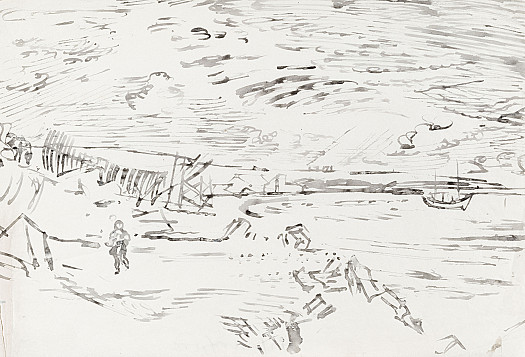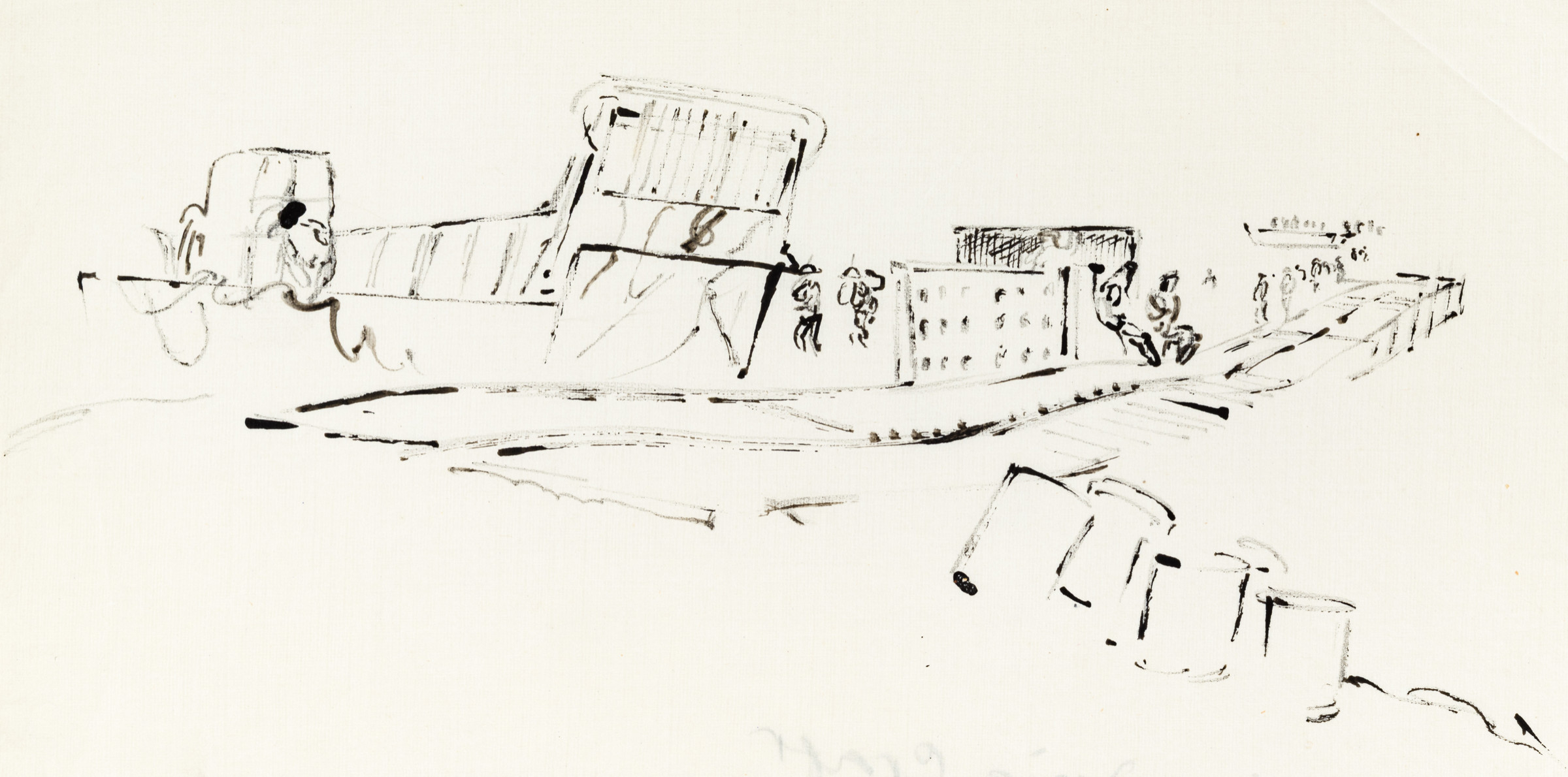
The artificial Mulberry harbours created for the Normandy Landings in 1944 were to facilitate rapid unloading of cargo. Caissons were purpose built concrete blocks made to form the breakwaters and piers, they were constructed in Britain, towed across the channel and sunk at both Gold and Omaha Beaches.
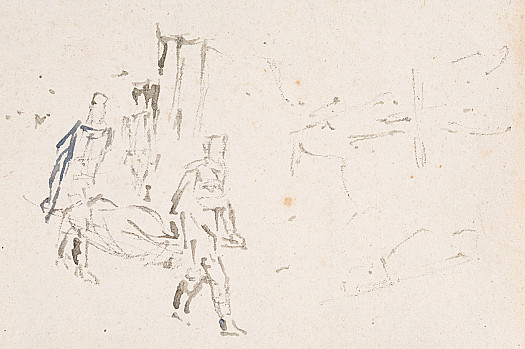
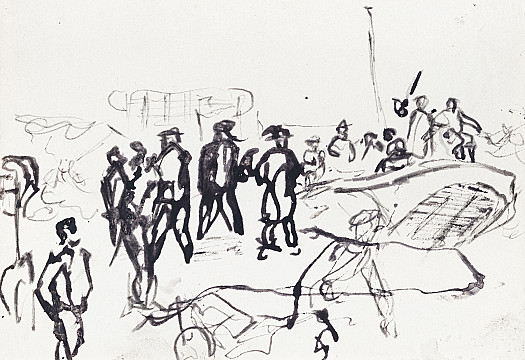
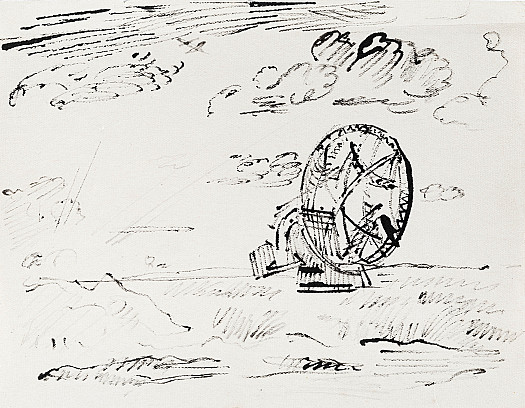
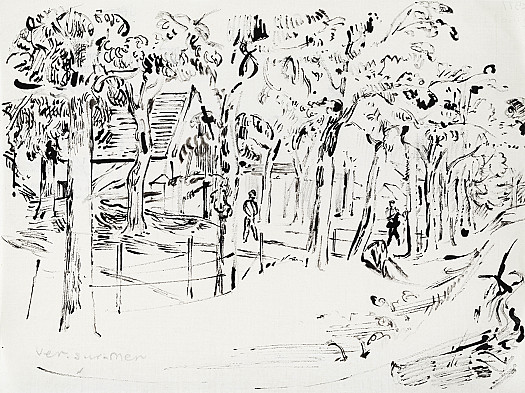
On 11 June 1944 Thomas Hennell (and Edward Ardizone) left Portsmouth for Normandy to record the allied positions, arriving only five days after the D-Day landings. Hennell sketched the immediate area and aftermath, around and to the south of the beaches, including the village of Ver-su-Mer and the German radar installation at Douvres.
Hennell then moved inland and recorded allied activity at Bénouville and Ranville and then ultimately, at the relief of Caen.
Mounted
8 & 10 Ryder Street, St James’s, London SW1Y 6QB
gallery@chrisbeetles.com
020 7839 7551
© Chris Beetles Ltd 2026 | Accessibility | Privacy | Sitemap