(click image to enlarge)
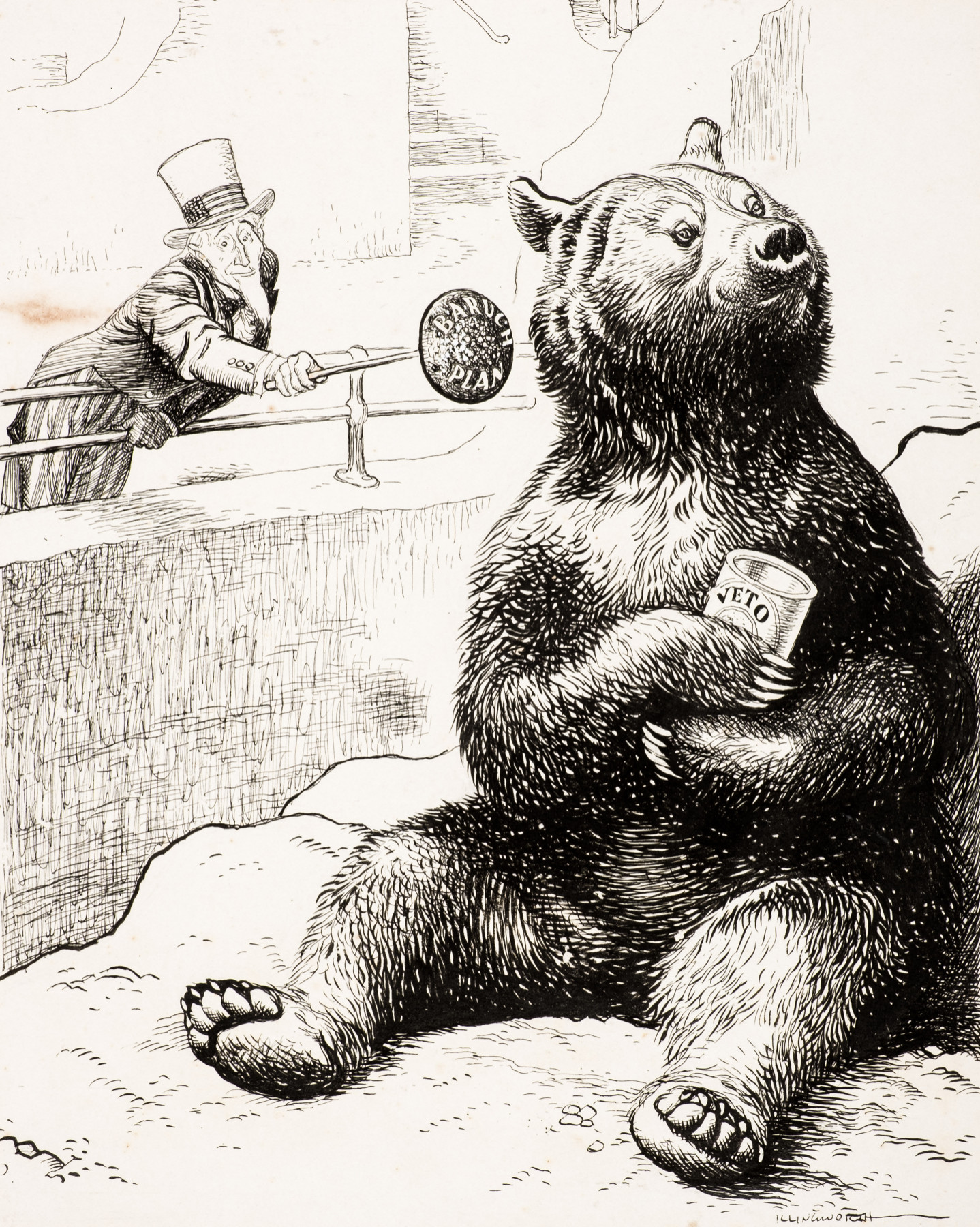
The United Nations Atomic Energy Commission was founded in January 1946 at the first meeting of the United Nations General Assembly. At its first meeting on 14 June 1946, the United States presented the Baruch Plan, drawn up by Bernard Baruch, the American financier who had been chosen to represent the US at the Commission. The plan’s goal was to prevent a nuclear arms race in the aftermath of the Second World War, proposing international control of all nuclear energy and the creation of an International Atomic Development Authority to inspect and manage nuclear sites worldwide. Once these systems were in place and effective, the US would eliminate its nuclear arsenal. The Plan also proposed that there would be no veto power over enforcement actions against violators. After months of negotiations, the Soviet Union rejected the Plan in late December 1946. The Soviet Union had been mistrustful of the United States’ true intentions, believing the Plan was an effort to maintain western dominance. In 1946, the United States were the only nation to possess atomic weapons and the Soviets feared that the US would retain its nuclear monopoly whilst gaining control over all nations’ atomic research through the proposed international authority. The Soviet representative, Andre Gromyko, presented a counterproposal, calling for the immediate banning of nuclear weapons and the destruction of all US bombs before any system was set up. The Soviets further insisted that the UN Security Council veto must apply to any enforcement actions, while the United States wanted to exclude the veto to ensure compliance could be enforced.
In Leslie Illingworth’s cartoon, Uncle Sam tries unsuccessfully to tempt the Russian bear with the Baruch Plan, with the representation of Russia still clutching its veto.
8 & 10 Ryder Street, St James’s, London SW1Y 6QB
gallery@chrisbeetles.com
020 7839 7551
© Chris Beetles Ltd 2026 | Accessibility | Privacy | Sitemap